
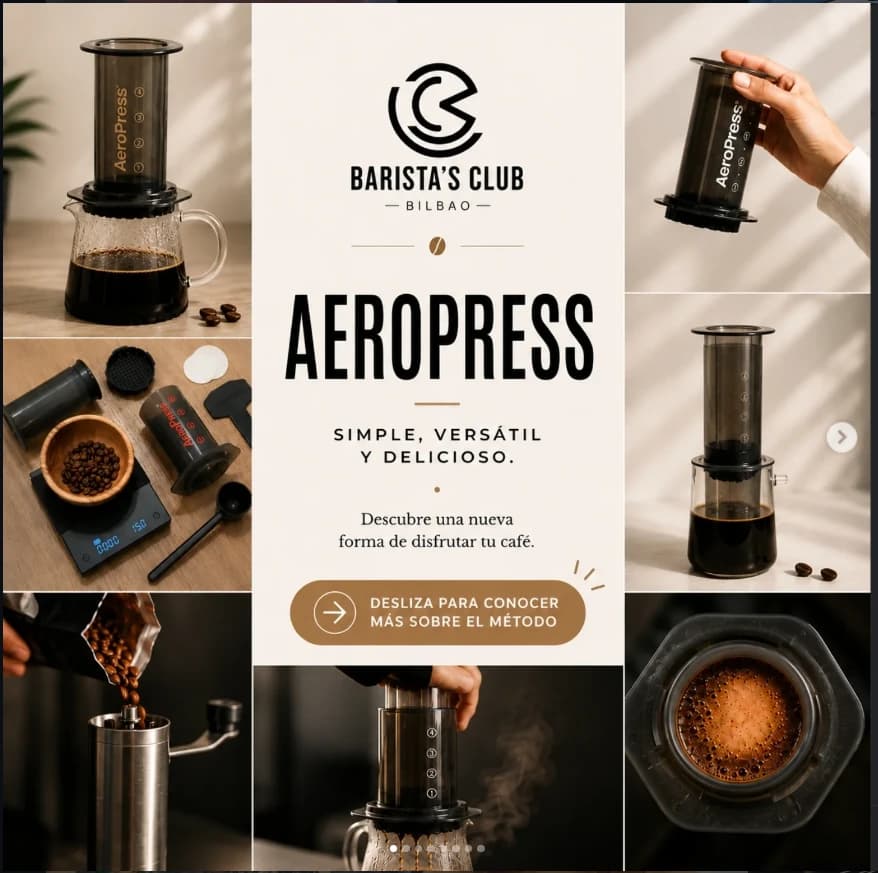
AeroPress
A different way to brew coffee
A versatile, simple method and a perfect way to experiment with extraction.
Read storyCoffee & Education
Understanding coffee is another way of enjoying it.
In Coffee & Education, we share short guides about brewing methods, origin, processing, extraction and everything that happens before a cup reaches your hands.
Without overcomplicating it.
Without making coffee feel inaccessible.
We simply want to help you discover what lies behind a good cup.
All stories
Subtopic
Ways to brew coffee and how each method changes the cup.
A different way to brew coffee
A versatile, simple method and a perfect way to experiment with extraction.
Read story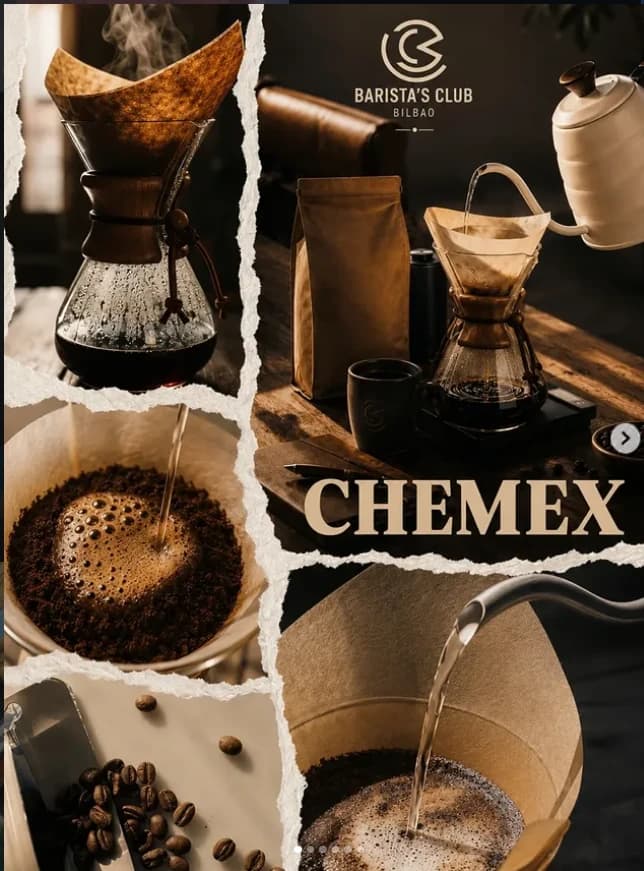
Clarity in the cup
A clean and delicate filter method for discovering floral, fruity or complex nuances.
Read story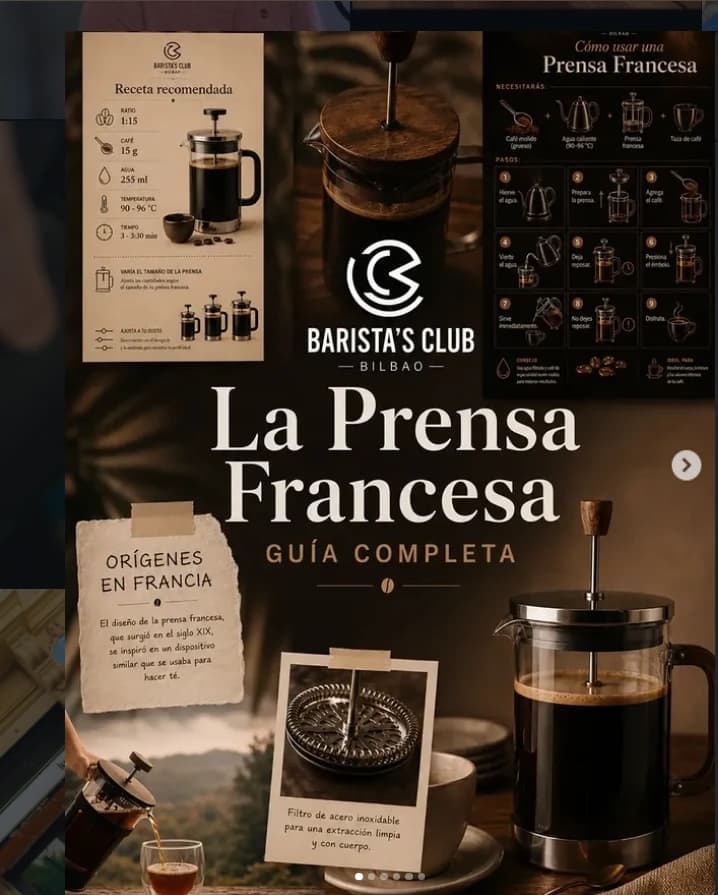
Body and texture
An immersion system that reveals a denser, more textured and present side of coffee.
Read story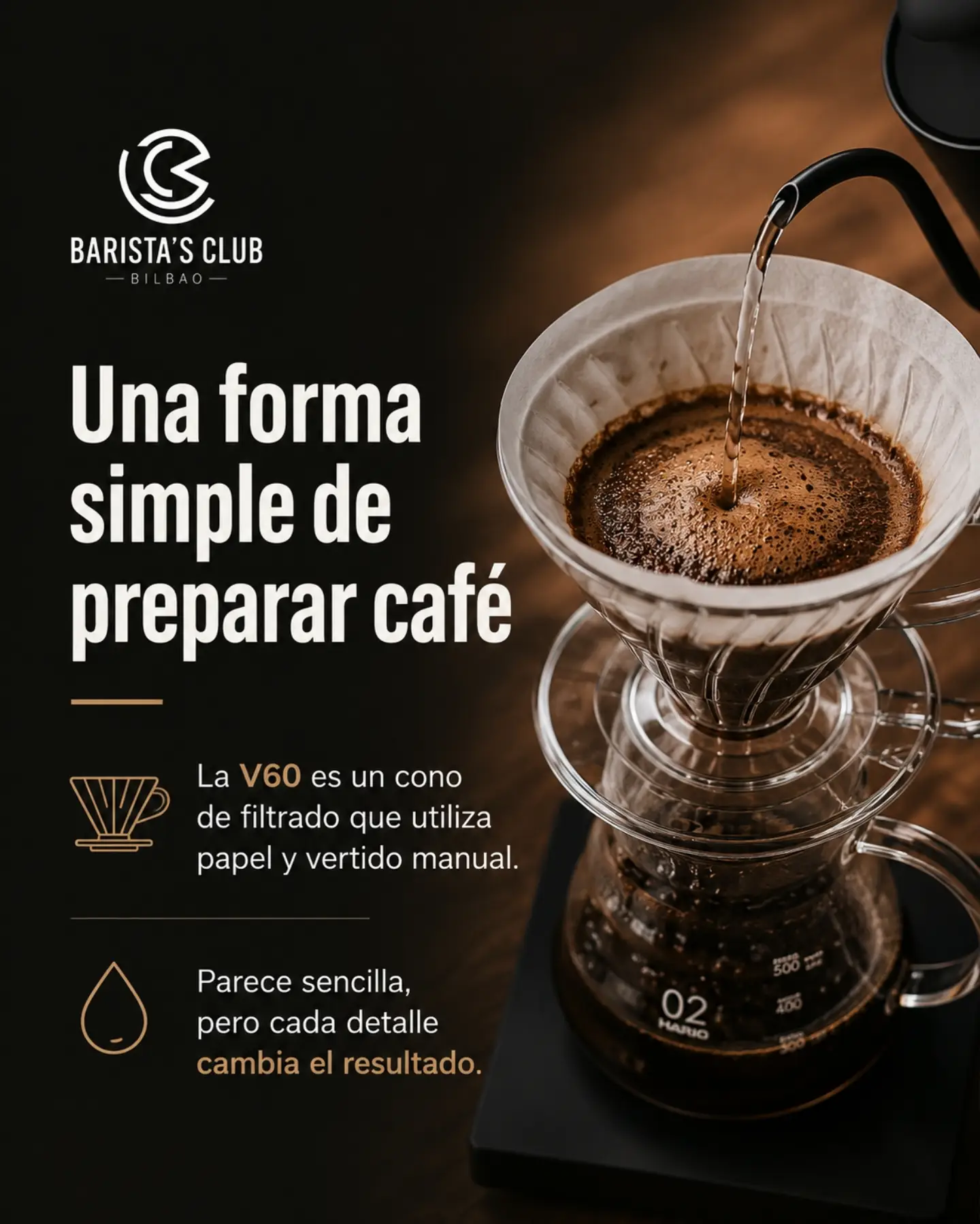
A simple way to brew coffee—and a precise way to understand it
A cone, a paper filter and a manual pour turn every small adjustment into a different cup.
Read story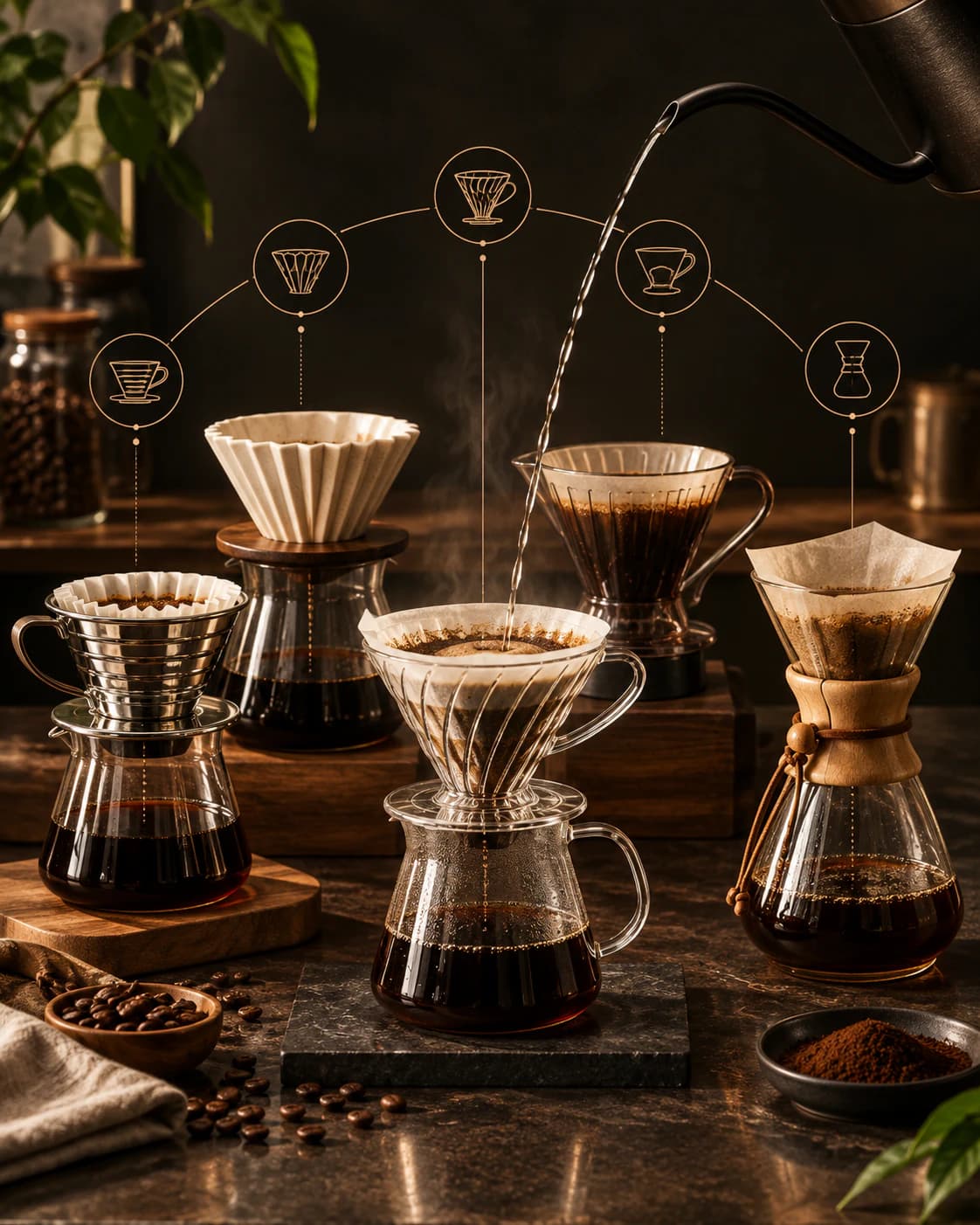
Kalita, Origami, Clever and other ways to brew
Shape, filter and the way water travels through coffee give every brewer a different way of building the cup.
Read story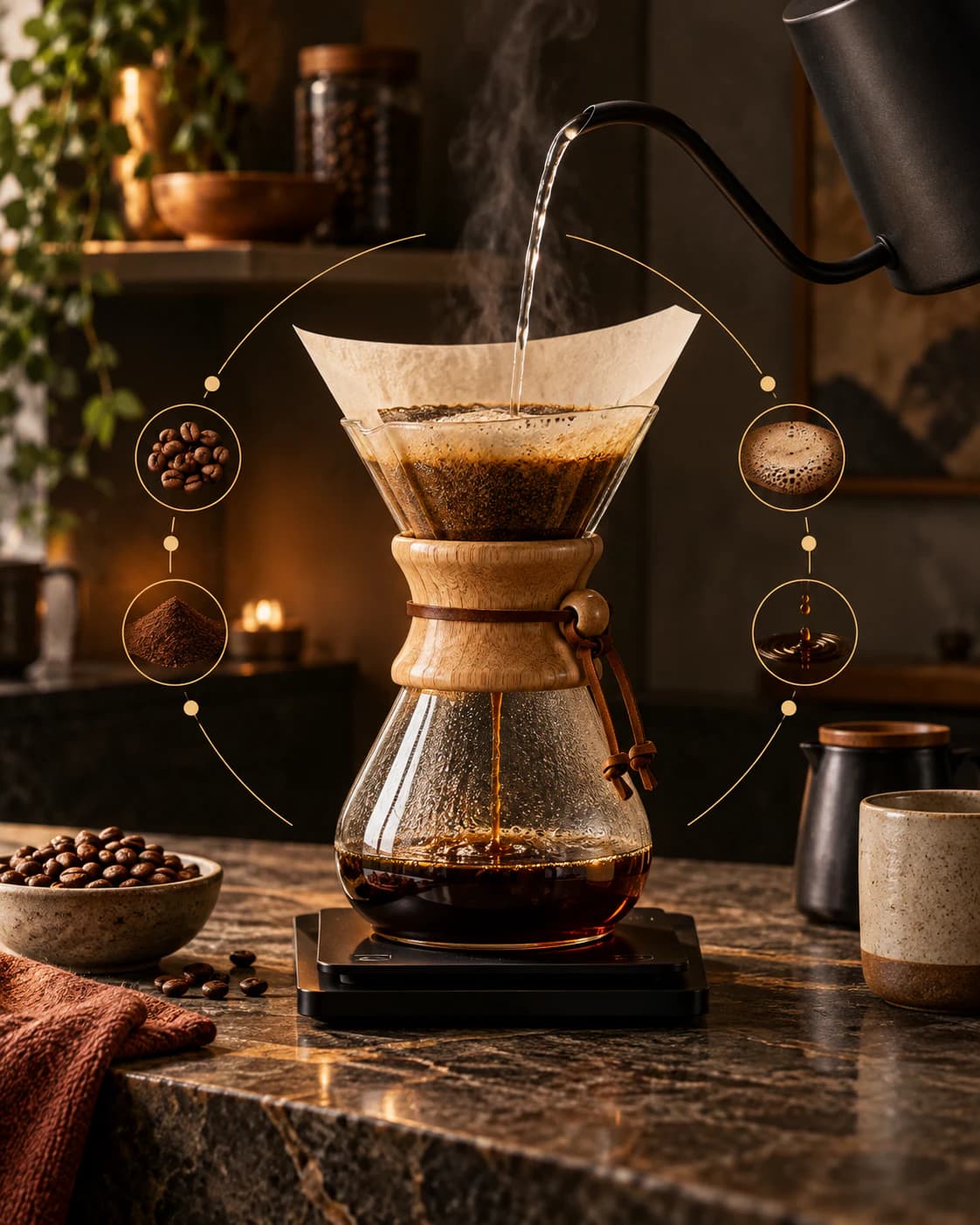
A simple starting recipe and how to adjust it
A step-by-step Chemex guide with a repeatable recipe and practical ways to adjust grind, time or ratio through taste.
Read storySubtopic
What happens before roasting and before coffee reaches your hands.
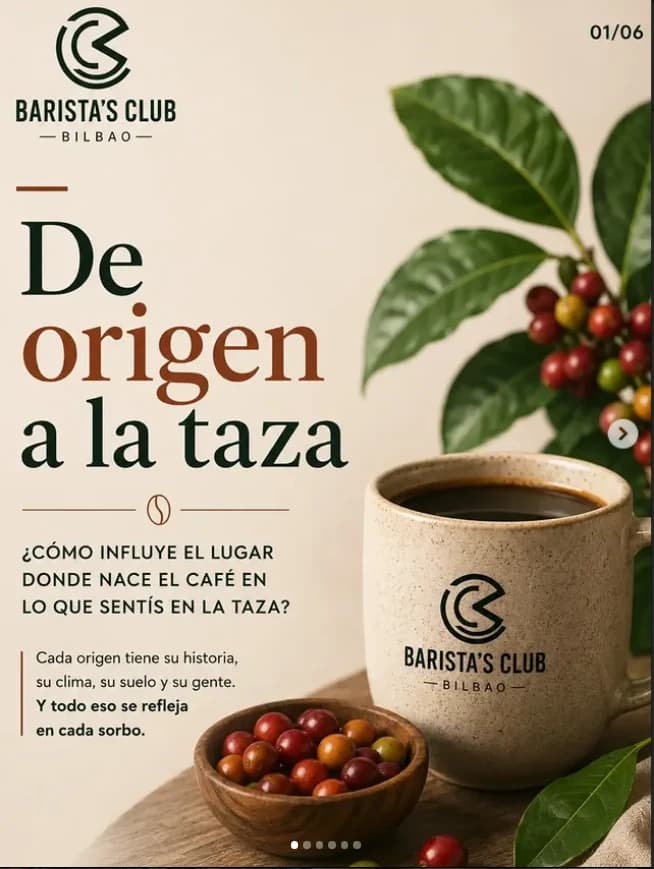
Washed, natural and honey
Three ways of expressing a coffee before roasting: washed, natural and honey.
Read story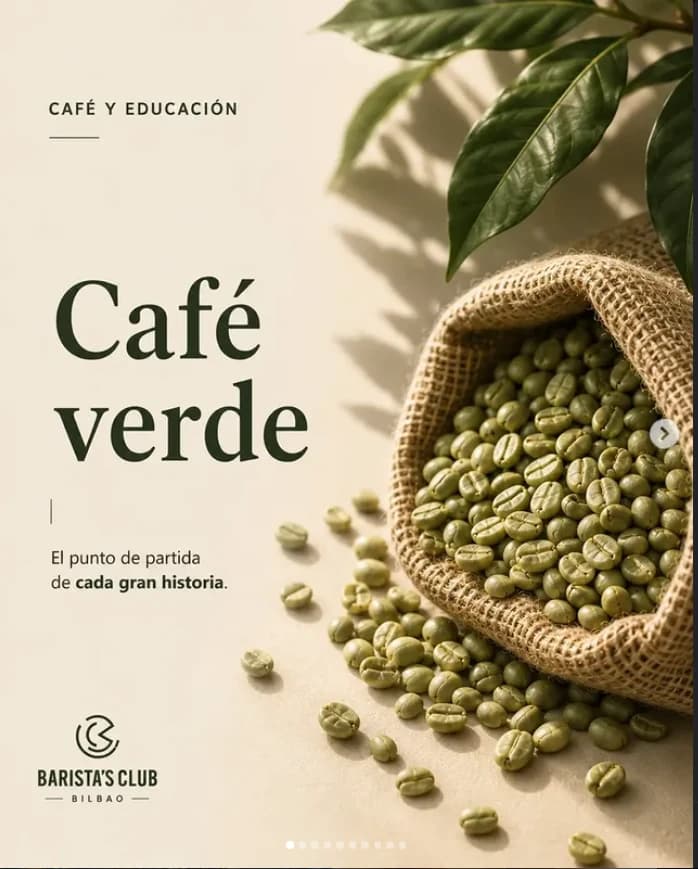
Before roasting
The bean before roasting and the qualities that begin to shape the final cup.
Read story
Where coffee begins to transform
Heat turns green coffee into aroma, colour and flavour; the roast profile decides which part of its identity reaches the cup.
Read story
Place matters, but never works alone
Altitude, latitude, climate, soil and human decisions interact to shape a coffee's potential.
Read story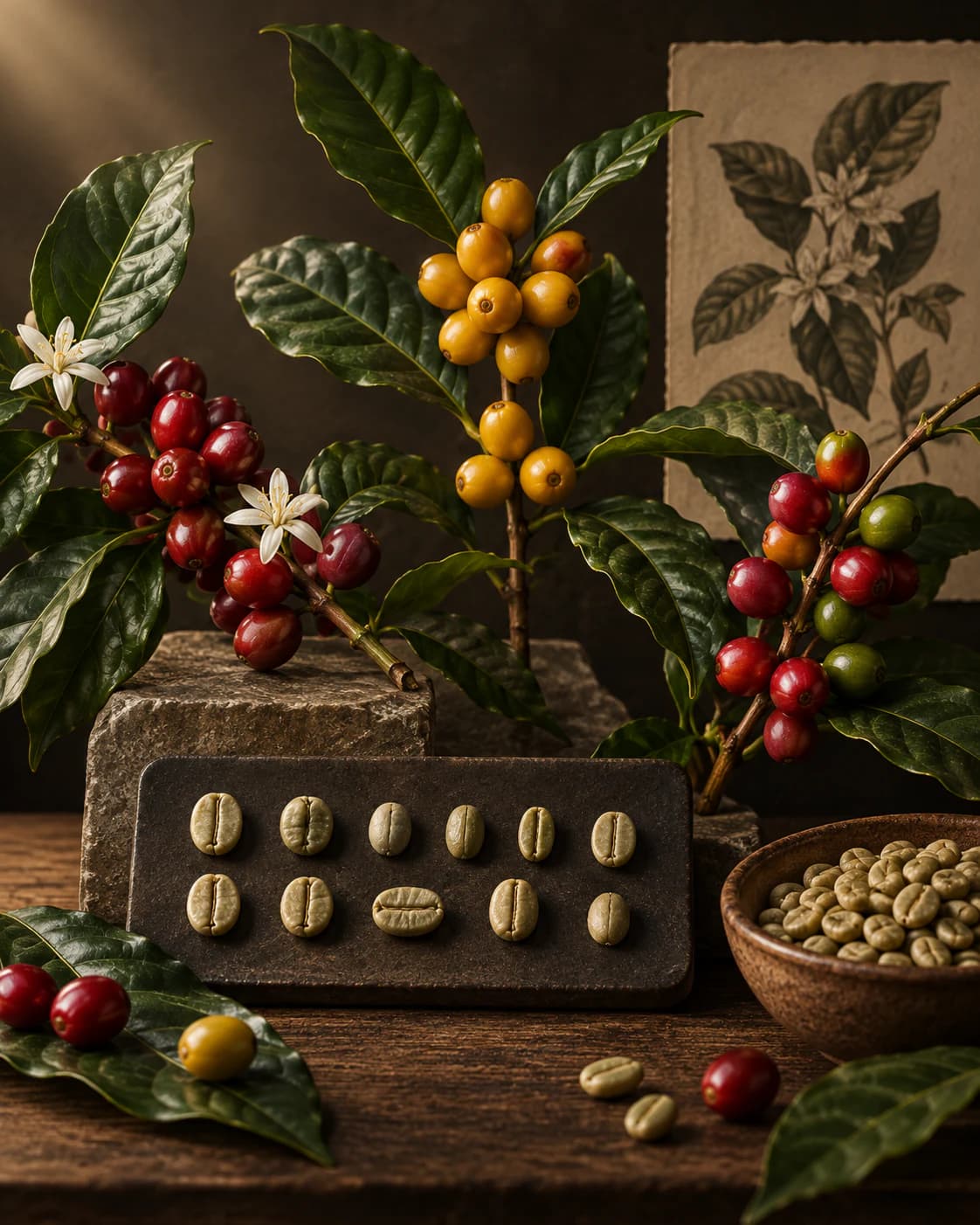
Bourbon, Caturra, Geisha and many more names
Variety describes genetics, adaptation and potential; it is an important part of coffee, but never a guarantee of flavour.
Read story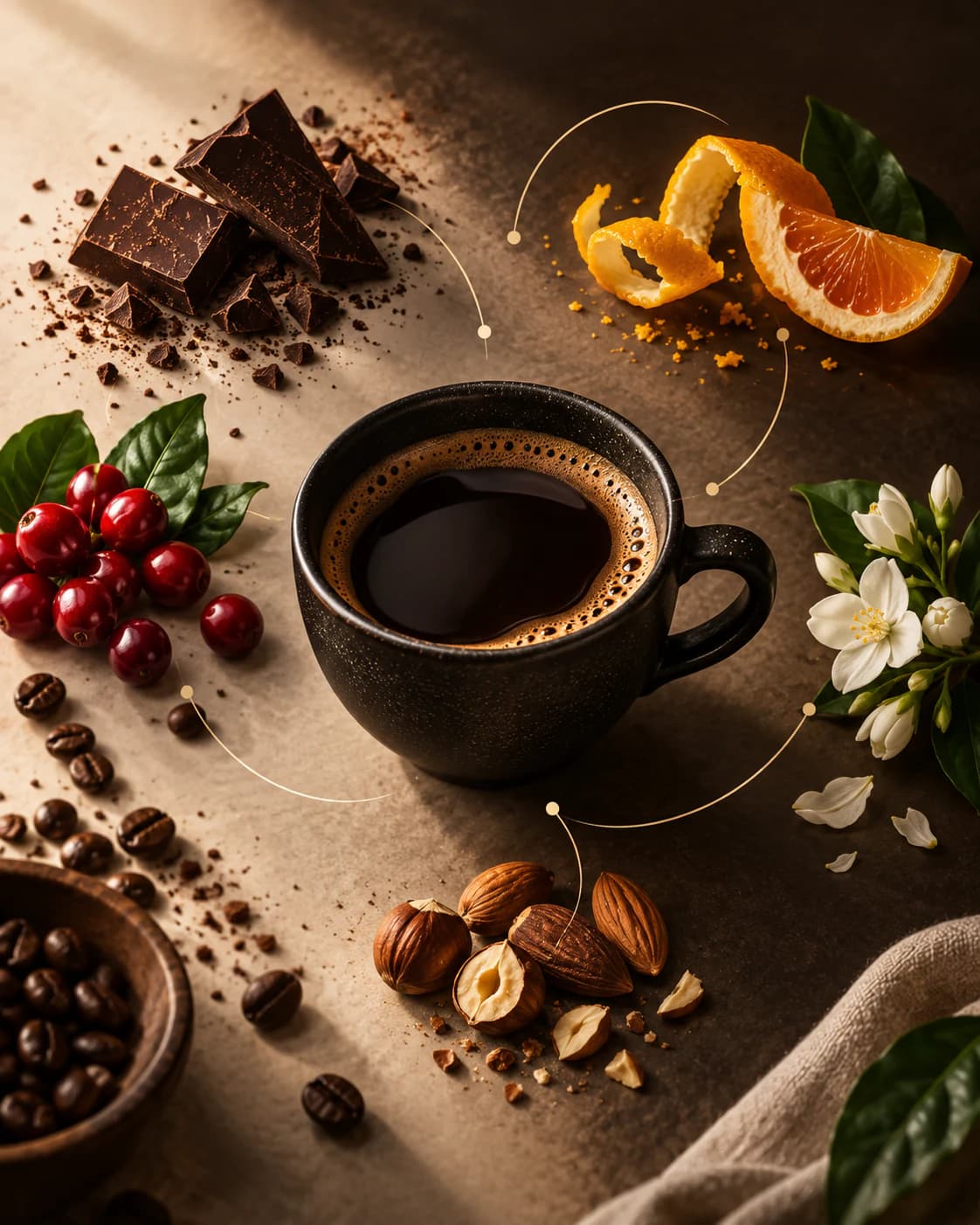
Where they come from and how to begin recognising them
Chocolate, fruit and flowers are not added ingredients: they are references that help communicate what we perceive in a cup.
Read story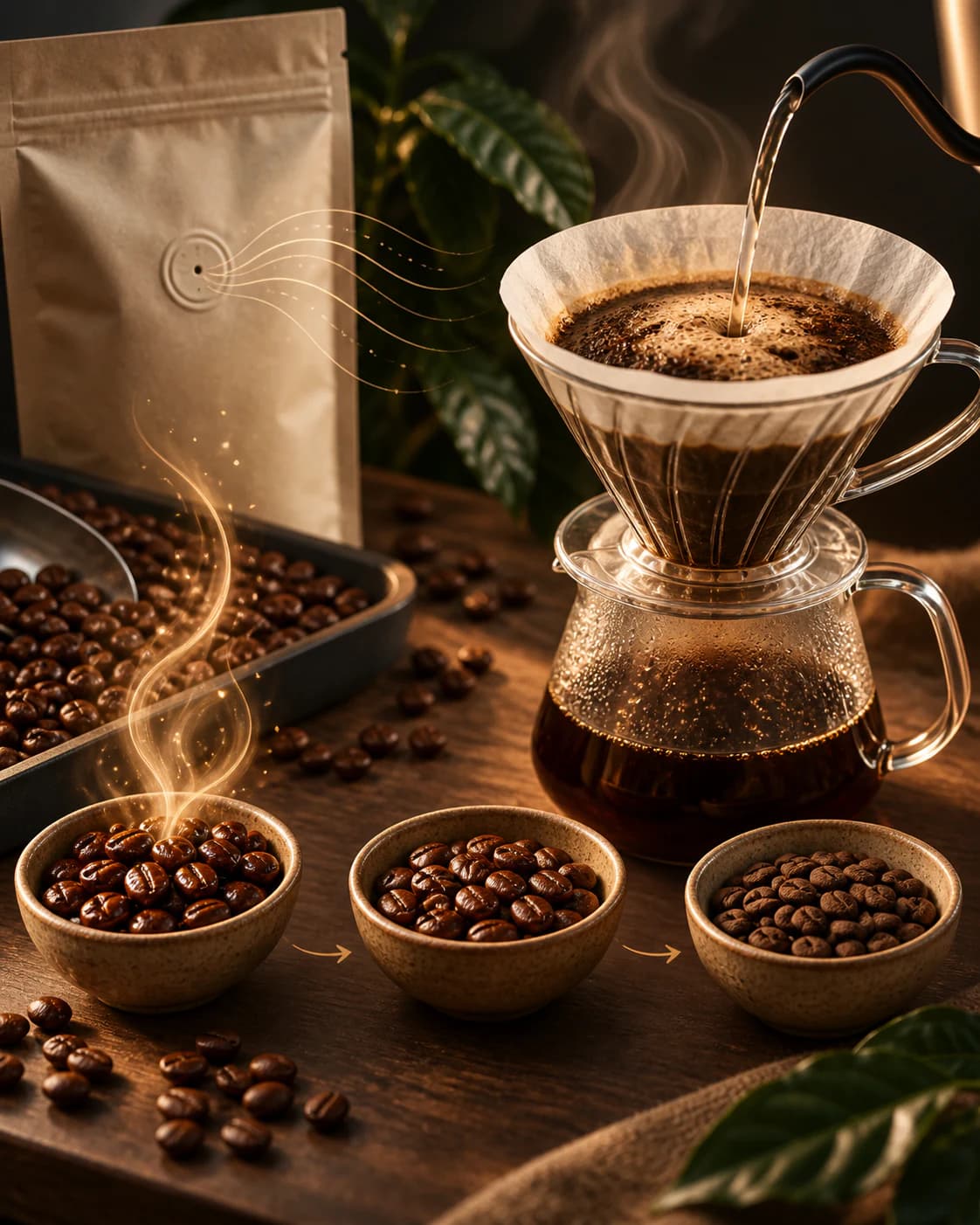
What happens after roasting and when to brew coffee
Coffee changes from the moment it is roasted: first it releases gas, then it slowly loses aroma.
Read story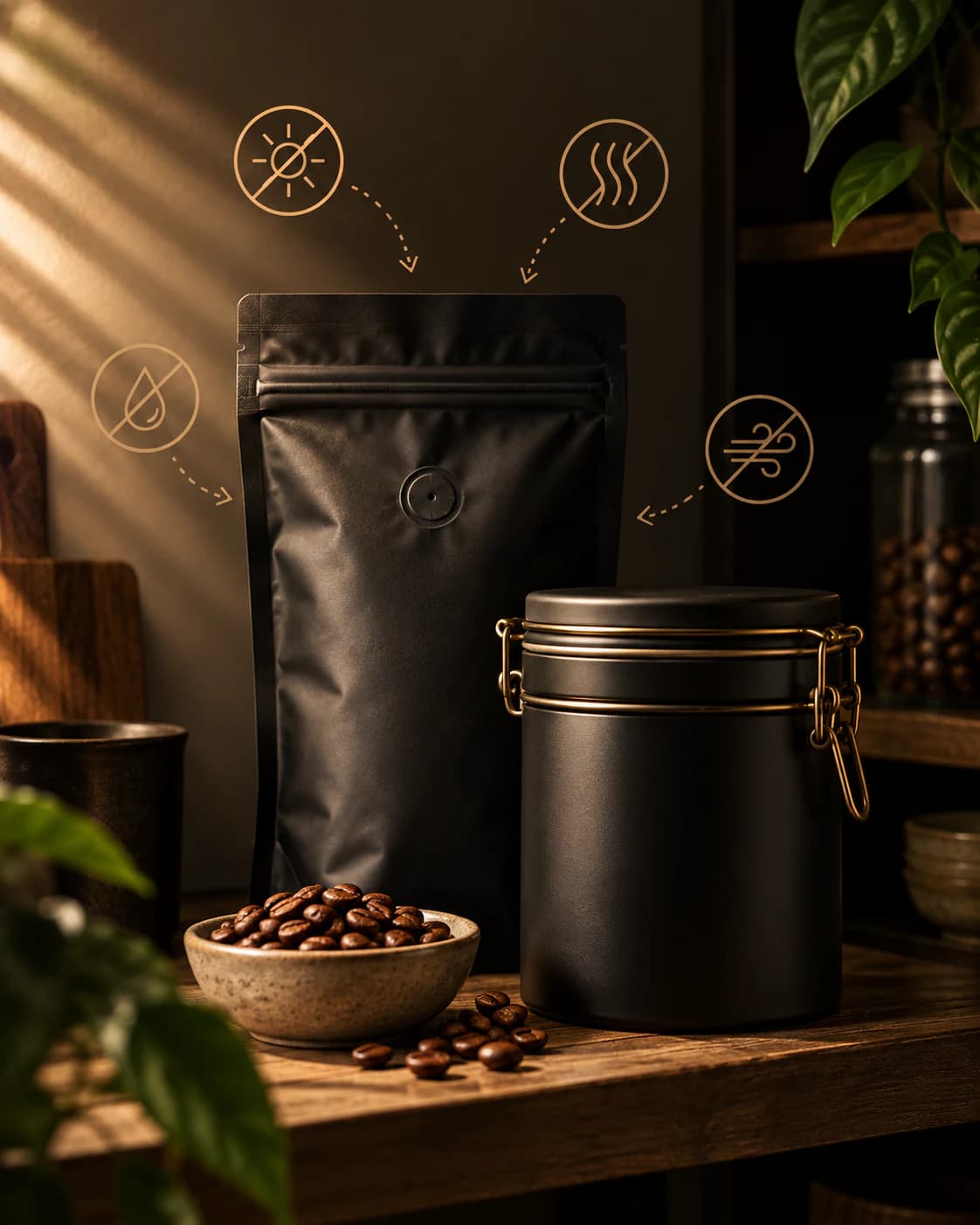
How to protect aroma and flavour at home
Air, moisture, heat and light accelerate staling; a simple routine protects every bag more effectively.
Read storySubtopic
Variables that shape the flavour of the cup.

Small in size, big in complexity
A small, concentrated drink shaped by the balance between many variables.
Read story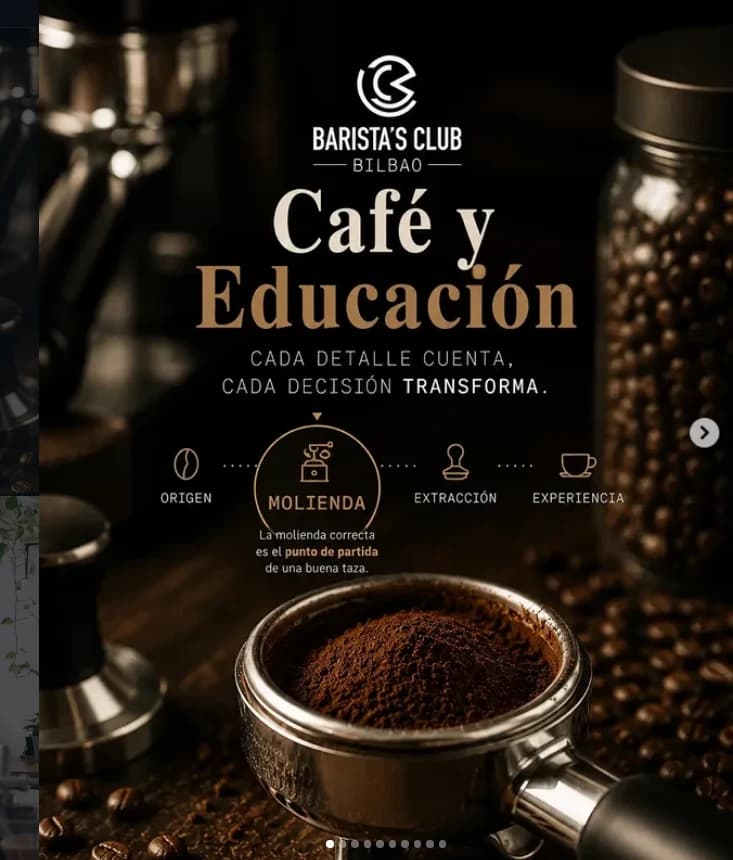
Size matters
Grind size shapes extraction and begins to build the flavour of the cup.
Read story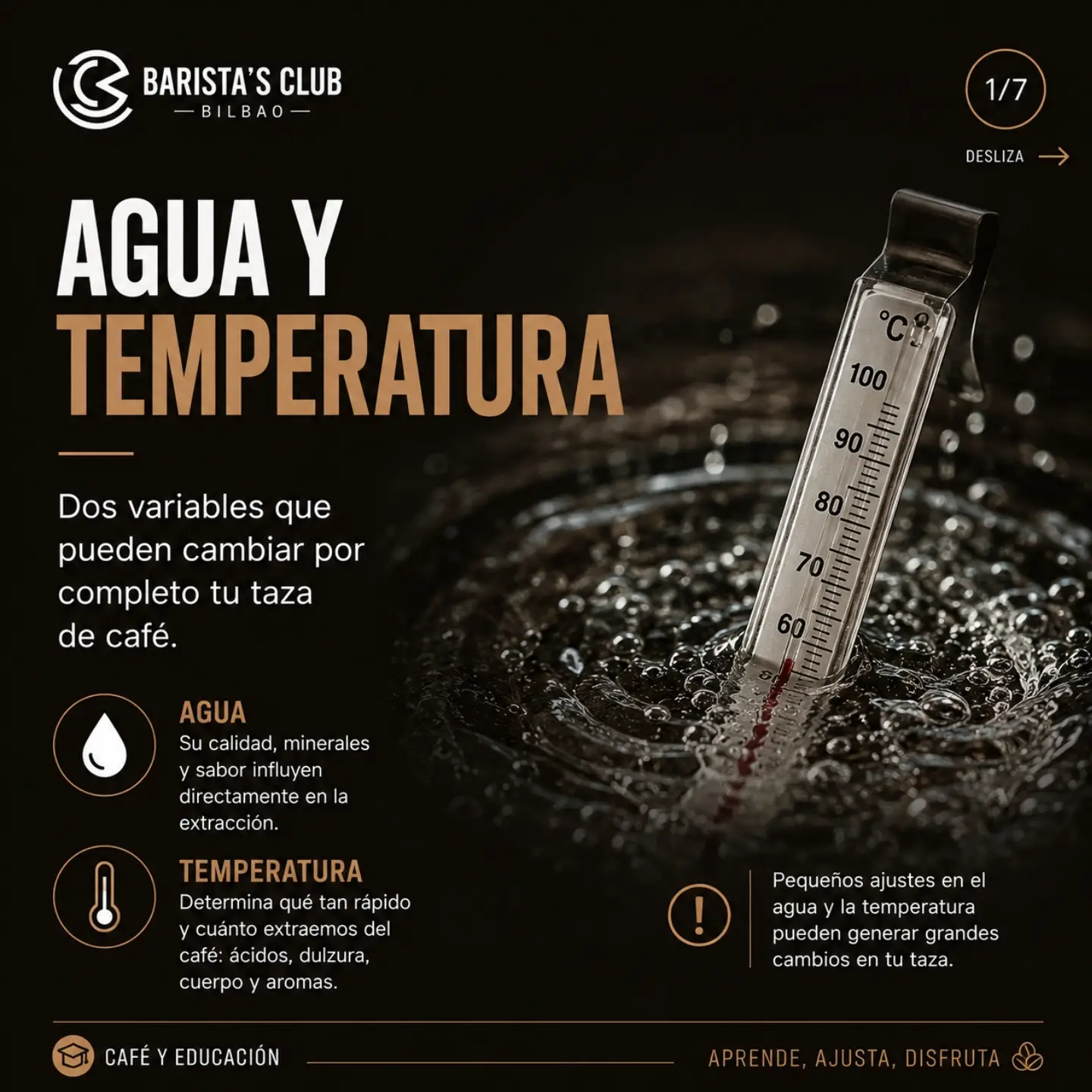
Two variables that can completely change a cup
Water is the main ingredient in brewed coffee; its composition and temperature decide which flavours reach the cup.
Read story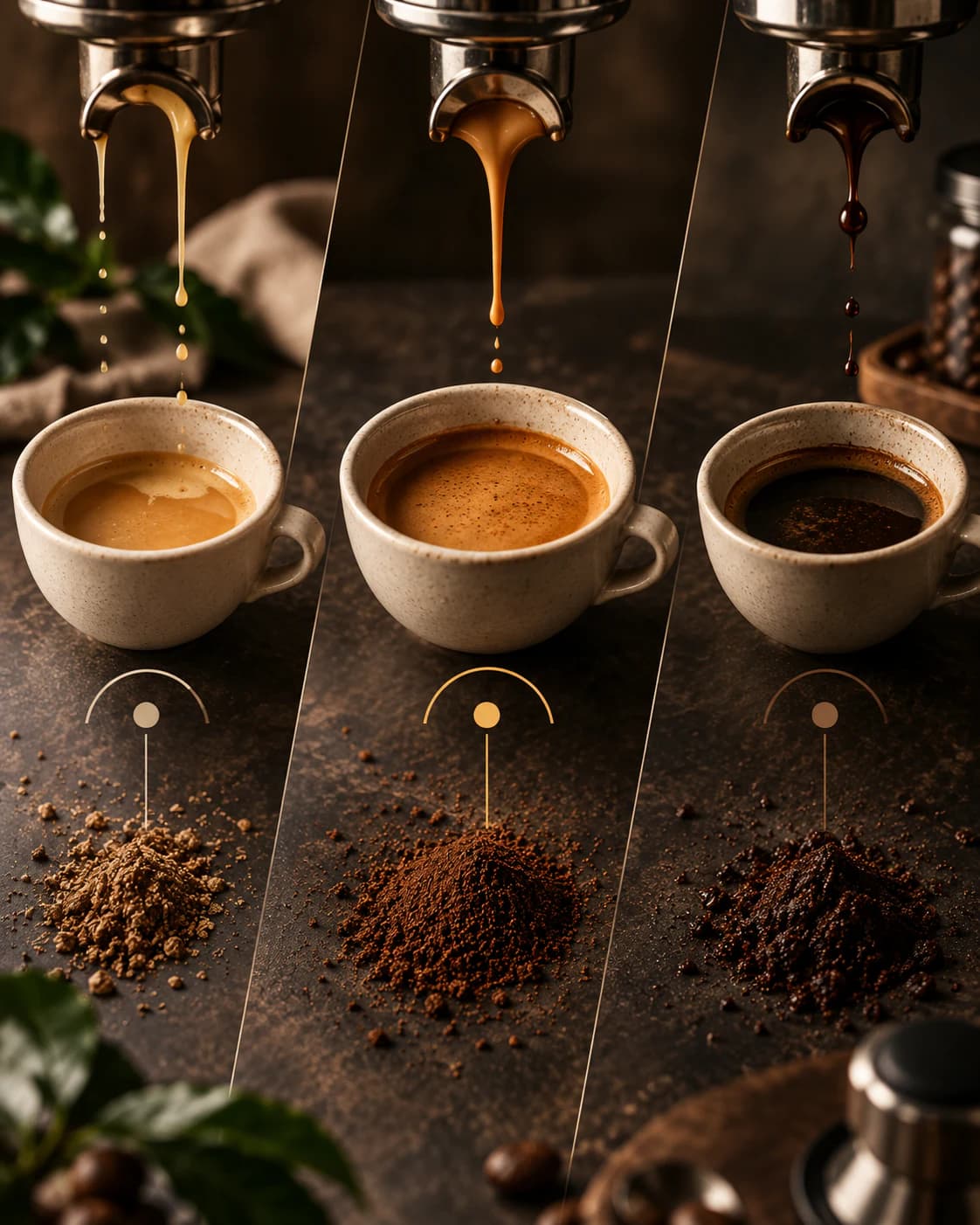
Under-extraction, over-extraction and balance
Understanding what water extracts from coffee helps us recognise an unbalanced cup and adjust the recipe with intention.
Read story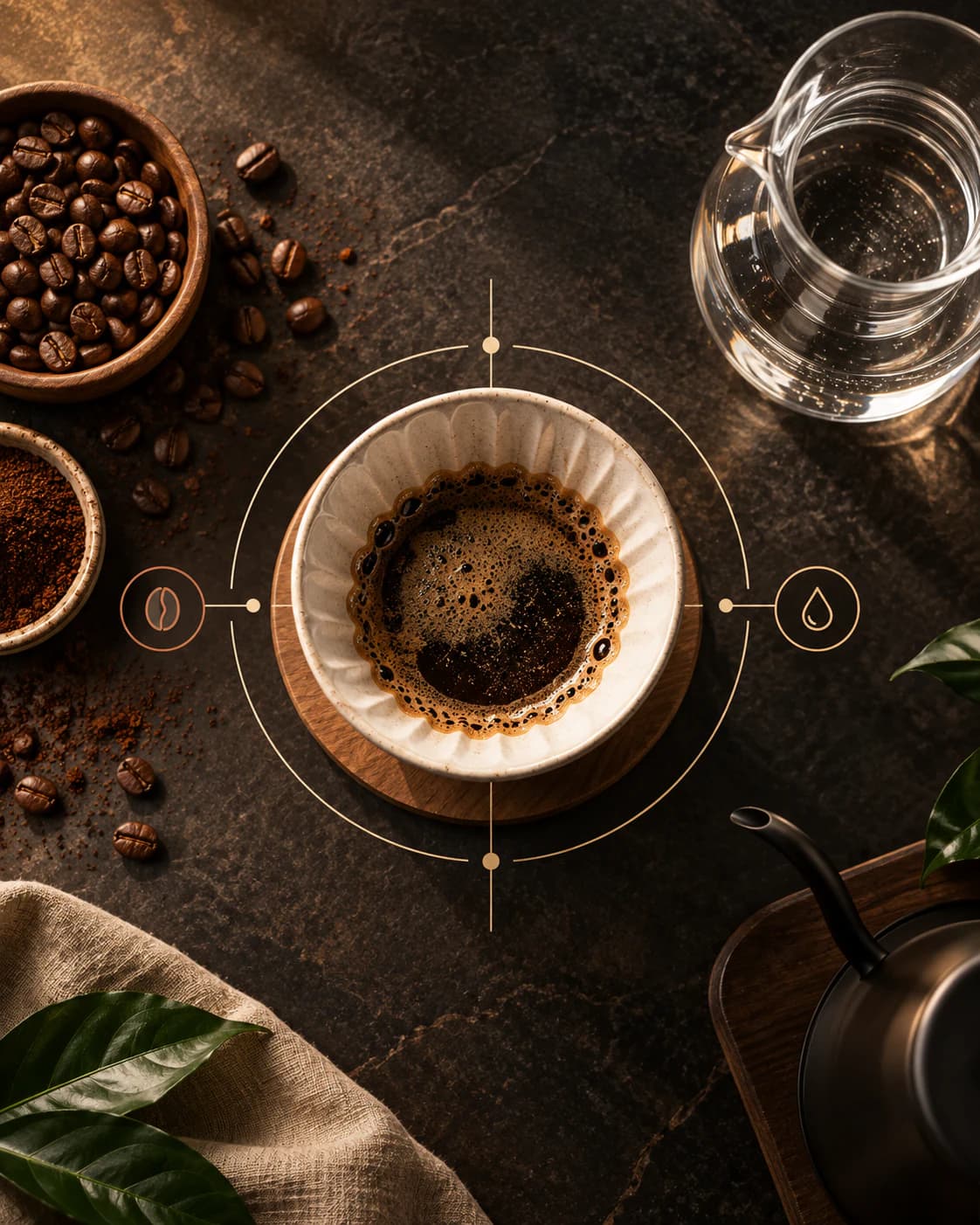
The proportion behind a recipe
The relationship between coffee and water shapes brew concentration and provides a starting point that is easy to repeat and adjust.
Read story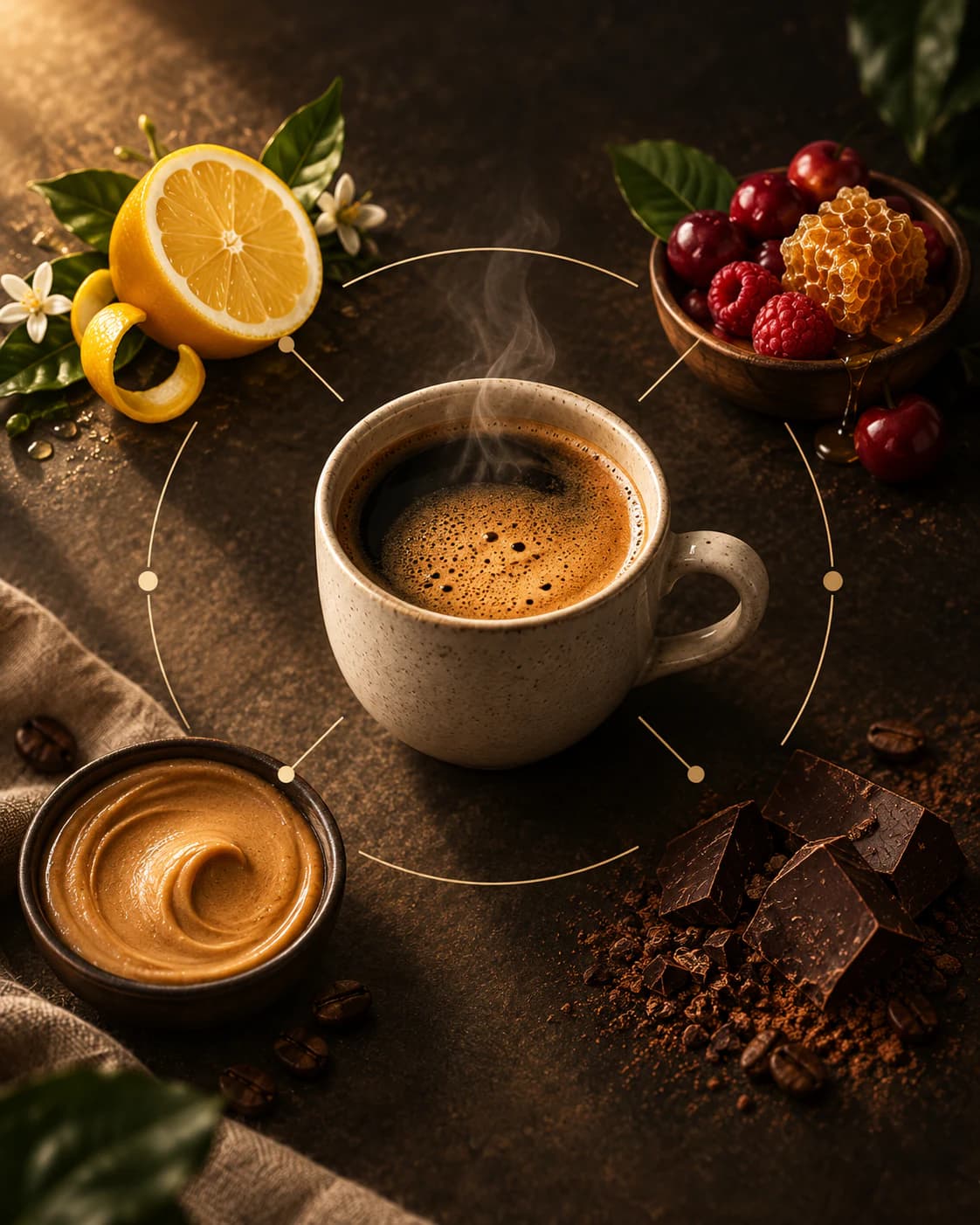
Four attributes for understanding a cup
Separating basic attributes helps us describe coffee and understand how they interact to create balance.
Read story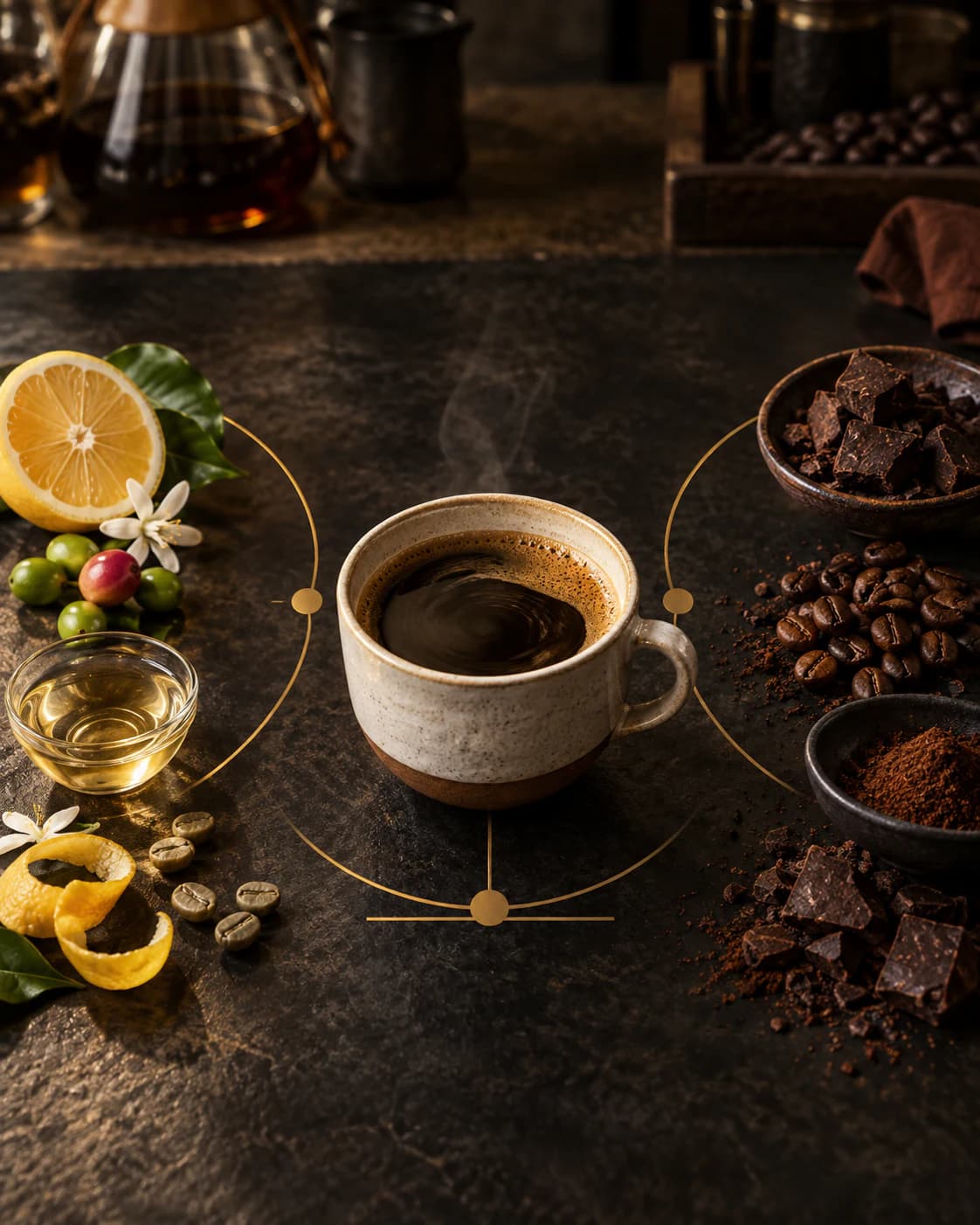
Learning to listen to the cup before changing the recipe
A practical guide to separating acidity, bitterness and imbalance, and choosing which variable to change first.
Read story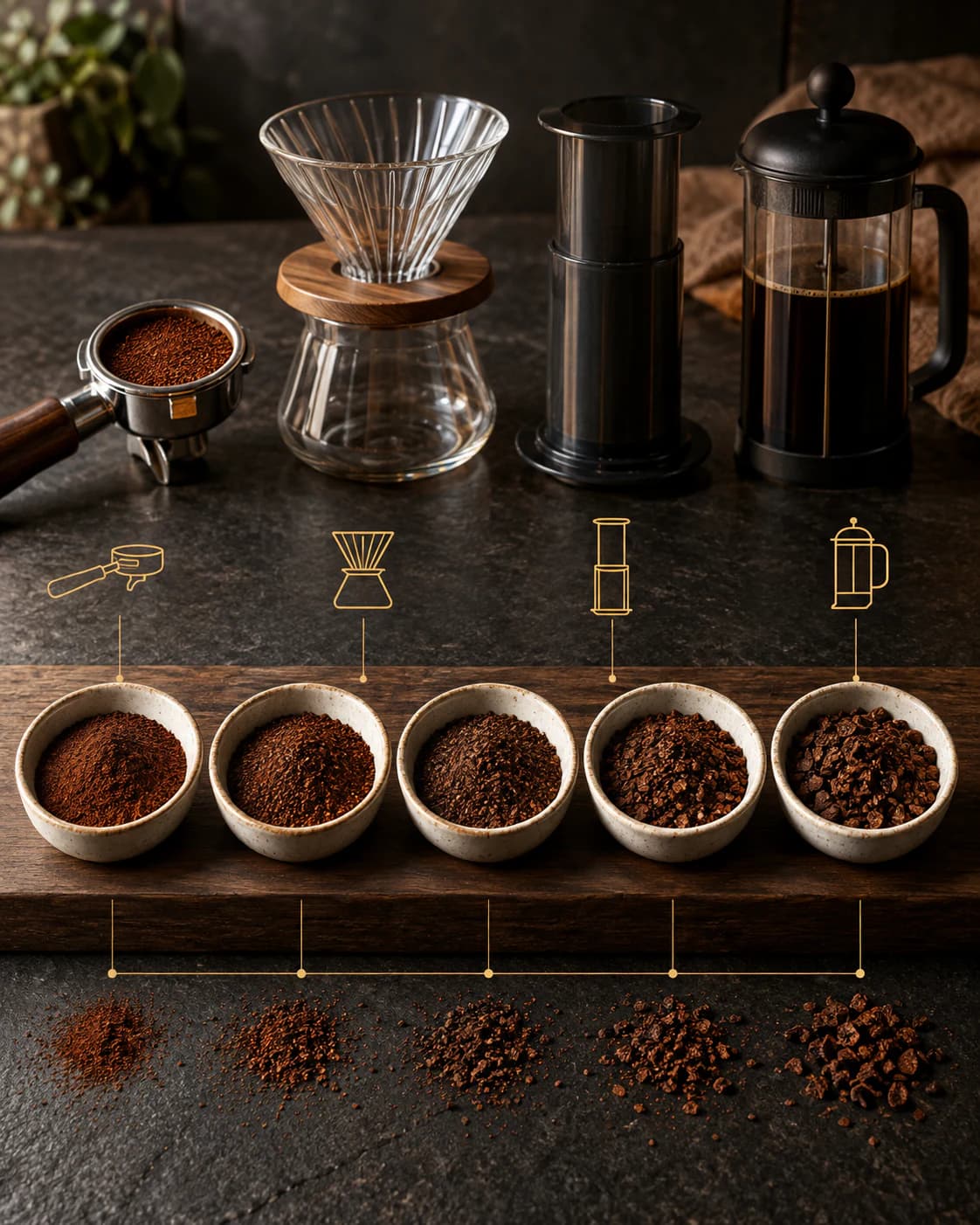
A practical map for starting and adjusting every brew
From espresso to French press: how to choose a starting grind and refine it through flow, time and flavour.
Read storyBaristas Club
This archive brings together what we learn, what inspires us and the places in Bilbao that feel close to home.

Shall we keep learning?