
A starting recipe, not a fixed rule
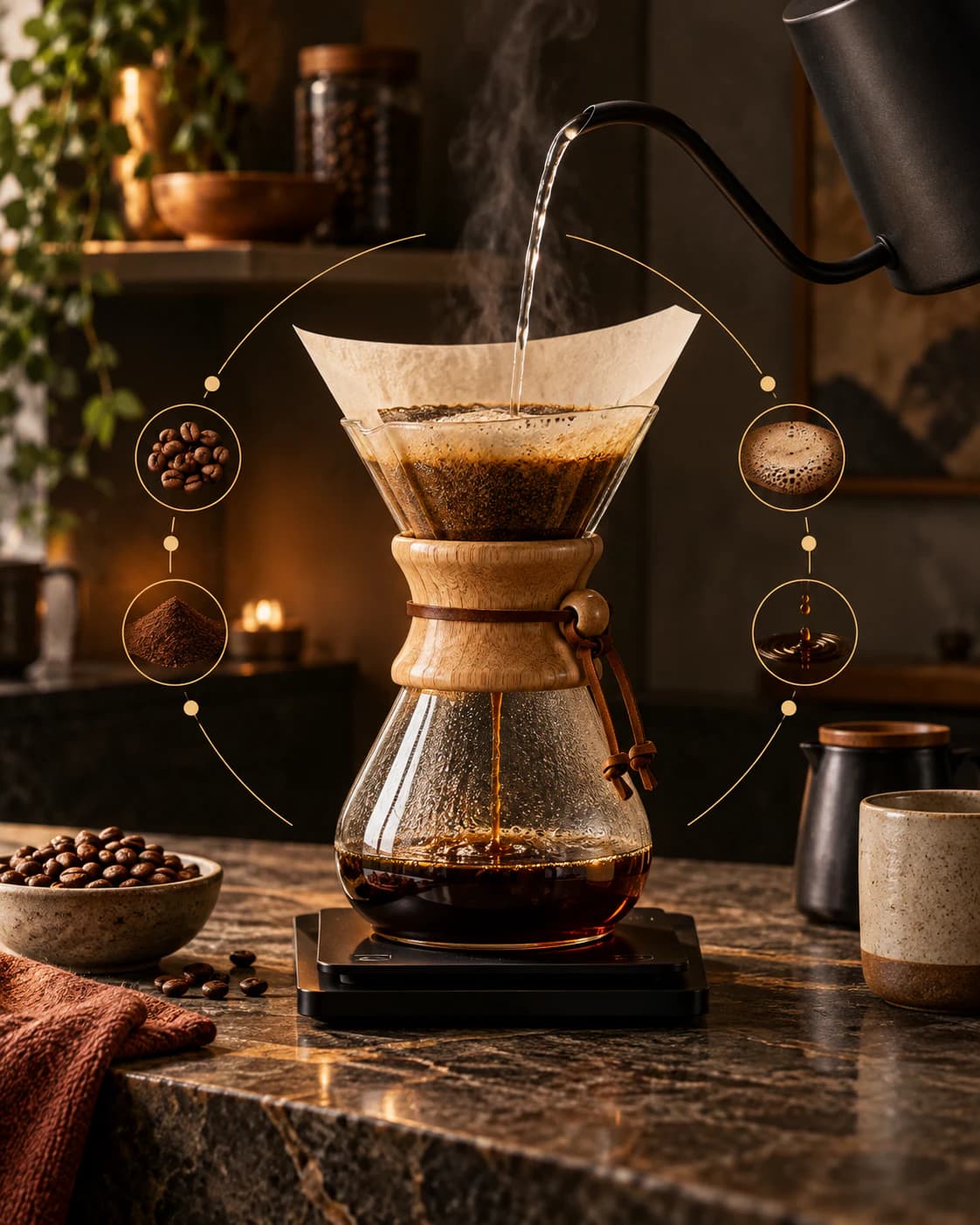
A balanced Chemex can begin with 30 grams of coffee, 500 grams of water and a medium-coarse grind. That is roughly a 1:16.7 ratio: enough for a clean cup with presence, while remaining easy to remember. Use freshly heated water, preferably between 92 and 96°C, and weigh both coffee and water.
Every coffee, grinder and filter behaves differently. This is not the only correct recipe; it is a repeatable starting point that makes each adjustment easier to understand. Scales bring precision, but flavour always makes the final decision.
Step by step
Open the filter so that the three-layered side sits against the pouring channel. Rinse it with hot water to settle the paper and warm the carafe, then discard that water. Add the ground coffee and gently level the bed. Pour about 60 grams of water, wet all the grounds and wait 30 to 45 seconds while the coffee blooms.
Continue pouring slowly and deliberately, without continually directing the stream against the paper. Use two or three pulses until the scale reaches 500 grams. Once the water has passed through the bed, remove the filter, gently swirl the Chemex to combine the brew and serve. The full process will often take around four minutes, although time is a clue rather than an isolated target.
Adjusting the recipe through taste
If the coffee tastes thin, sharply sour or finishes too quickly, try grinding slightly finer. If it feels dry or rough, or the water takes far too long to drain, try a coarser grind. Make small changes and move only one variable at a time so you know which decision improved or worsened the cup.
If the flavour is pleasant but you want more intensity, use a little more coffee while keeping the water constant. For a lighter drink, slightly reduce the dose or add water. Strength and extraction are not the same: a cup can be strong yet unbalanced, or delicate and beautifully extracted.
Coffee that works well in a Chemex
The Chemex's thick filter retains many oils and fine particles, creating an especially clean cup. It can therefore show floral, fruity coffees and elegant acidity with great clarity. Chocolate-led and sweet profiles also work; they simply appear with less weight and sediment than they would in a French press.
The best recipe is the one that makes the coffee recognisable and invites another cup. Record dose, water, grind and time, but always add one final line: what you found in the cup. That note is what turns a formula into learning.