Fresh does not mean straight from the roaster
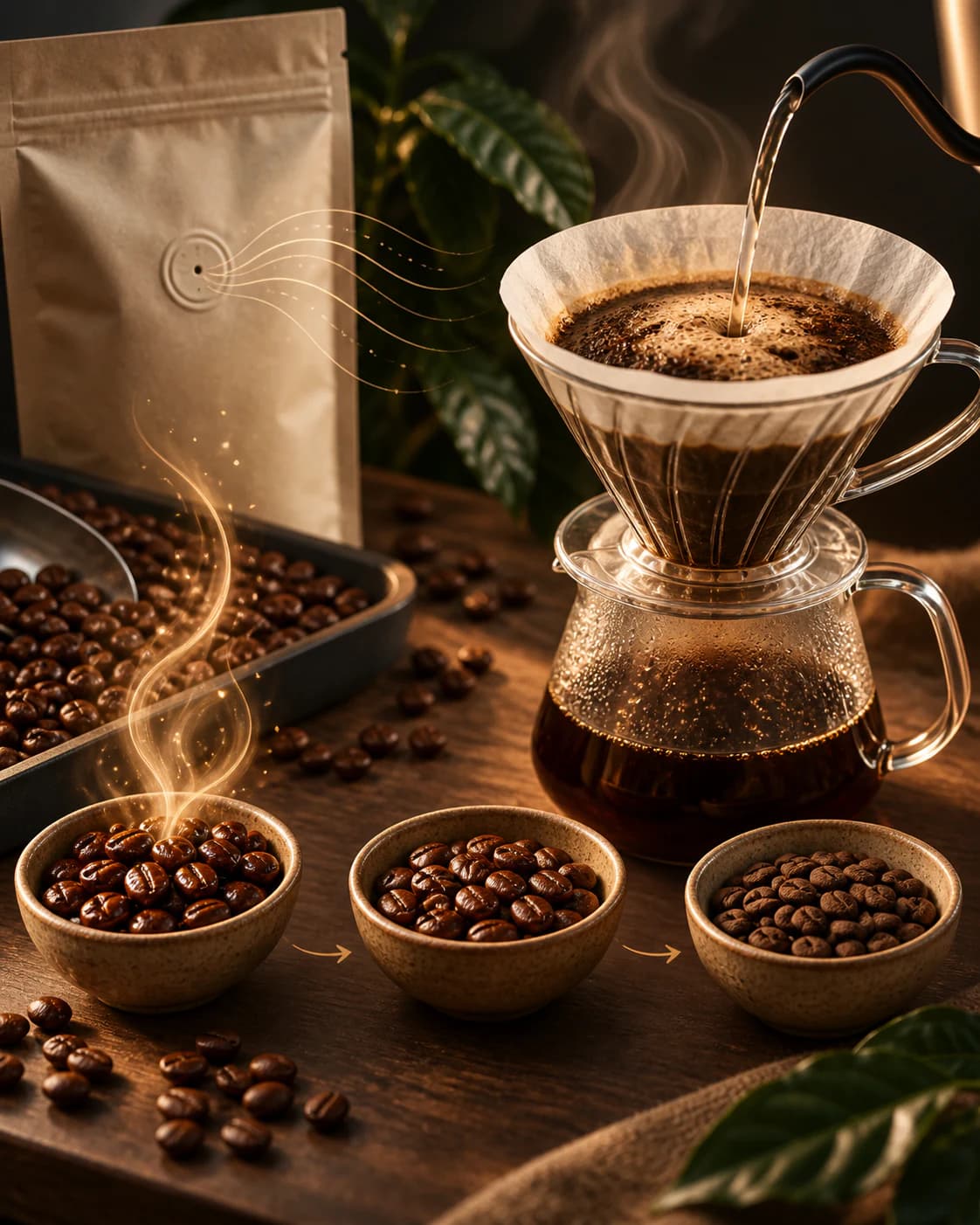
Roasting creates aromas and carbon dioxide that remain trapped inside the bean's structure. Degassing then begins: CO₂ leaves quickly at first and more slowly as days pass. Extremely recent coffee can release so much gas during brewing that water struggles to wet and extract the grounds evenly.
Many coffees therefore benefit from a short rest. There is no universal number: roast profile, density, packaging, brewing method and recipe all change the moment at which a cup becomes most expressive.
A window, not a deadline
The roast date is a reference for following change. Freshness research shows particularly dynamic development during the first few weeks, but that does not turn day twenty-one into a boundary. Well-packaged coffee can remain delicious afterwards; it simply presents a different relationship between gas, aroma and ease of extraction.
In espresso, excess gas can affect flow and crema. In filter coffee it appears as an active bloom. Tasting the same coffee on different days teaches more than applying one fixed rule.
Ground coffee changes much faster
Grinding multiplies the surface exposed to air. Gas and aromatic compounds escape far more quickly, while oxygen has more space to act. Keeping coffee whole and grinding only the dose we are about to brew is therefore one of the most useful freshness habits.
The aroma released when a bag opens is lovely, but it is also aroma leaving the coffee. Opening only when needed, closing the bag carefully and avoiding repeated transfers helps protect it.
Deciding when to drink it
Begin with the roaster's recommendation and observe the brew. If the coffee releases a great deal of gas, espresso is difficult to stabilise or filter coffee behaves unevenly, a few more days of rest may help. If intensity fades later, a slightly finer grind or small recipe adjustment can be useful.
Freshness is not a race for the newest possible coffee. It means knowing the roast date, storing the beans well and enjoying their best window before aromas lose definition. The most reliable guide is the combination of date, brewing behaviour and taste.