
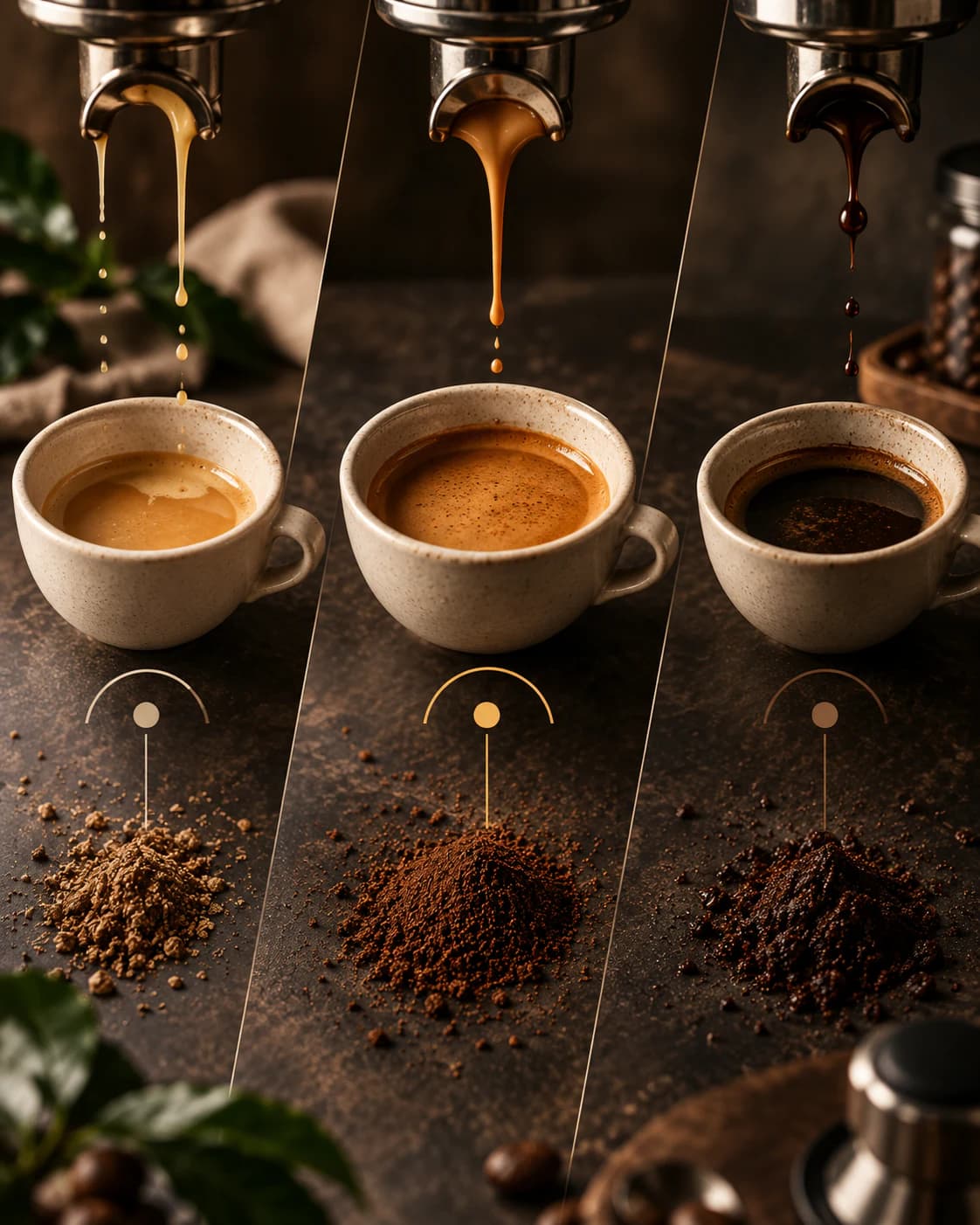
What coffee extraction means
Brewing coffee means using water to dissolve part of what is held inside the roasted bean. Not everything dissolves at the same speed, and not everything soluble tastes pleasant. Acids, aromas, perceived sweetness, bitter compounds and materials that create texture appear at different stages and in different proportions. Extraction is therefore not about removing as much as possible, but about finding a combination that lets the coffee taste clear and balanced.
Dose, water, grind size, temperature, contact time, agitation and brewing method work together. Changing one variable alters how water moves through or around the coffee. The cup reflects that whole relationship rather than any single number.
Recognising under-extraction
Under-extraction describes a brew in which water has dissolved too little to build a balanced cup. It may taste sharply sour, low in sweetness, short and sometimes slightly salty. This is different from pleasant acidity: lively acidity can be juicy and integrated, while under-extraction tends to feel unfinished.
A grind that is too coarse, short contact time, cooler water or uneven wetting can all contribute. A useful correction is to change one thing at a time: grind a little finer, extend contact or improve the pour, then taste again.
Recognising over-extraction
Over-extraction occurs when brewing draws out an excessive share of less pleasant compounds, or extracts the coffee unevenly. The cup can feel dry, rough, hollow or persistently bitter. Not every bitter flavour proves over-extraction: roast, origin and the drink itself may naturally contribute bitterness. What matters is whether it overwhelms the whole cup.
Grinding too fine, extending contact for too long or adding excessive agitation can encourage it. A slightly coarser grind or shorter brew is a sensible experiment while the rest of the recipe stays unchanged.
Balance is found by tasting
Balanced extraction does not have one fixed flavour. A cup can be light or intense, floral or chocolate-led, yet its parts support one another: acidity carries sweetness, bitterness does not dominate and the finish invites another sip. Measurements help us repeat and compare; flavour tells us whether the recipe works.
The most useful approach is simple: record the recipe, taste attentively and move one variable at a time. That is how we stop correcting at random and begin to understand what a particular coffee needs.