It begins with a question
A new menu starts long before a dish receives its name. It begins by noticing what people ask for, what the team enjoys making, which ingredients arrive with the season and what we feel is still missing from the story. It also means looking at what already works and deciding whether it should stay, evolve or make room for something else.
For the autumn and winter menu, we are looking for comfort without heaviness, familiar dishes with a turn of our own and a natural relationship with coffee. We do not want to accumulate novelties. Every addition needs a reason, and the whole menu still needs to sound like Baristas Club.
The idea enters the kitchen
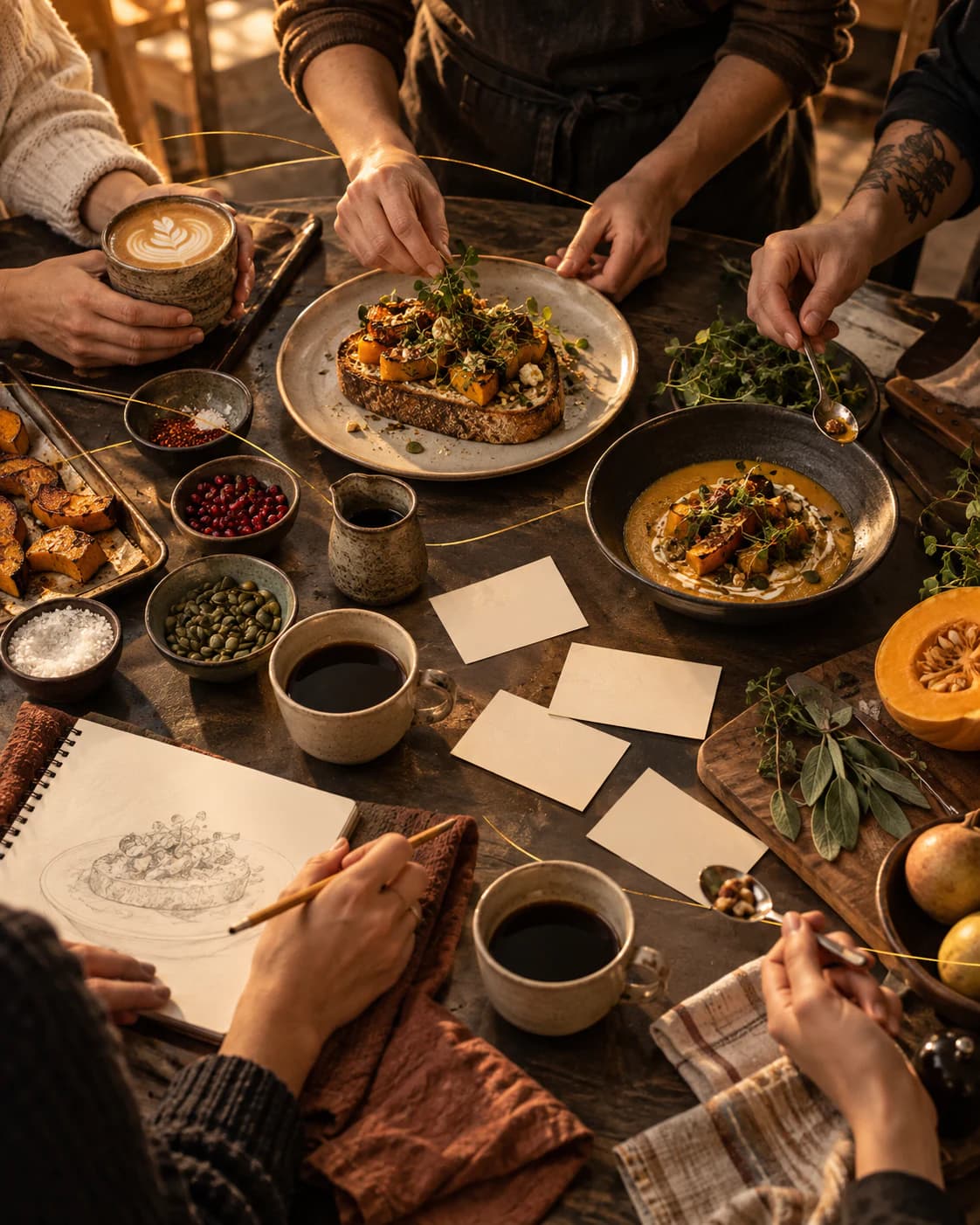
On paper, almost anything seems possible. Testing turns intuition into something concrete: quantities, textures, temperature, assembly, time and cost. A combination can be delicious yet fail during a real service. Another may need several attempts before it feels distinctive without becoming complicated.
We test to discover, but also to discard. We change an ingredient, simplify a gesture, compare breads, adjust a sauce or decide that the dish is not ready. The process improves when nobody has to defend their first idea and the whole team can say with confidence what works and what does not.
Designing for the guest and the team
A dish must reach the table well, but first it has to coexist with the kitchen, counter and pace of the café. We consider preparation, available space, equipment, allergens, cleaning and the busiest moments of service. Caring for the guest experience also means creating a system the team can sustain.
That is where a less visible kind of design appears: organising movement, writing recipe sheets, testing presentation and training people until there is a shared way of working. Consistency does not come from demanding identical results by decree, but from sharing criteria and giving people the tools to respond when the day changes.
A menu is never completely finished
Launching a menu does not close the process. The first weeks reveal how dishes behave beyond testing: what guests understand, what needs explaining, which pace the service can support and which small adjustments improve the result. Listening does not mean changing direction every day; it means paying attention to reality.
Creating a menu is a form of shared growth. The offer grows, the team learns and Baristas finds a new expression without losing its identity. When a plate reaches the table, it looks like a simple gesture. Behind it are conversations, mistakes, trust and many small decisions that have learned to agree.